
Having a website gives your small business a permanent, 24/7 presence that no social media profile can fully replace. For Filipino entrepreneurs, this distinction matters more than ever as consumer behavior shifts decisively toward online research before any purchase decision.
Table of Contents
ToggleThe Digital Landscape Facing Filipino Entrepreneurs Right Now
The Philippines consistently ranks among the most internet-active countries in Southeast Asia. Filipinos spend significant hours online daily, browsing social platforms, watching video content, and searching Google for products and services close to home. That last behavior is the one that matters most to you as a business owner.
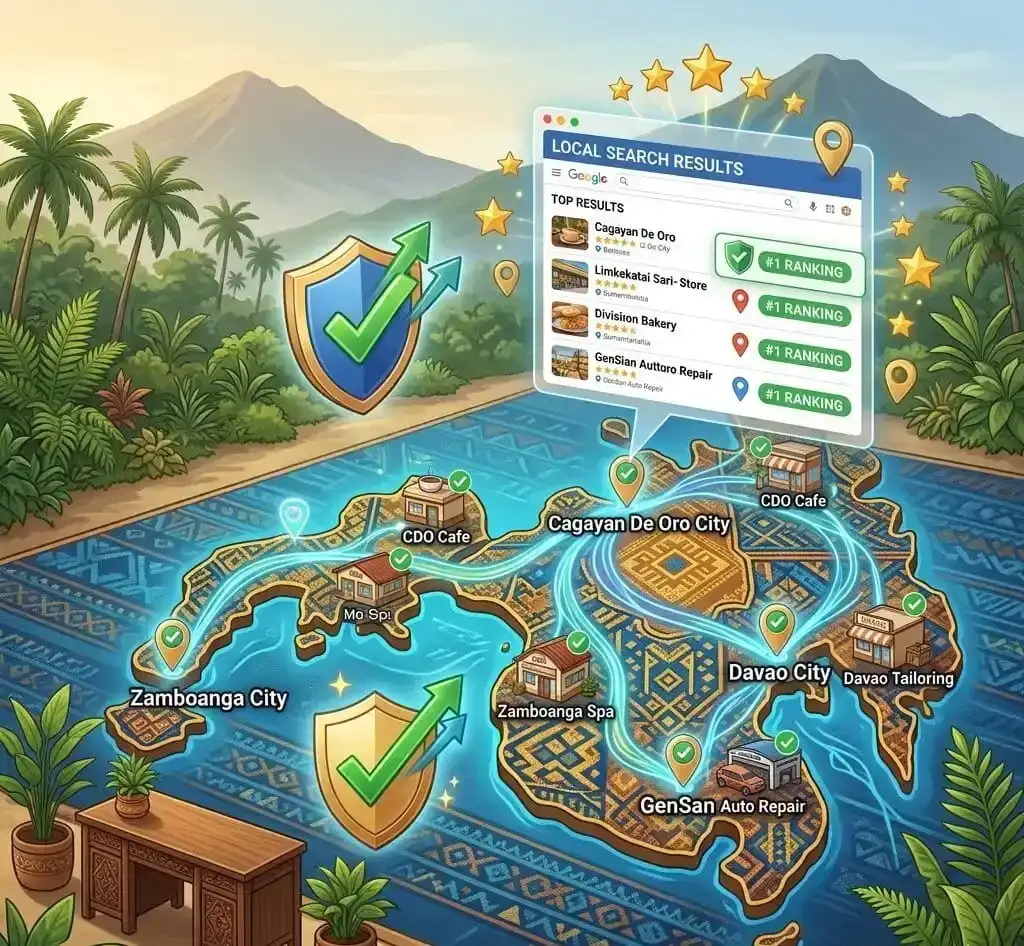
When someone in Bukidnon types “best coffee shop near me” or “affordable staycation in Malaybalay City” into Google, the businesses that appear in those results are the ones with websites. A Facebook page alone does not rank in those searches. A TikTok account does not show up in Google’s local pack. Your website does.
The gap between businesses that have websites and those that do not is widening. Large corporations have had digital storefronts for years. Small and medium-sized enterprises in the Philippines are still catching up, which actually works in your favor right now. Entering the space before your direct competitors means you capture the organic search traffic they are missing.
Beyond search visibility, consider how purchasing decisions are made today. A potential customer might hear about your business through word of mouth, but before they call or visit, they will search for you online. If they find nothing, or if they find an outdated Facebook page with no clear contact information, many of them will move on to a competitor who has a clean, functional site with pricing, hours, and a contact form.
What a Website Actually Does for Your Bottom Line
This is where the conversation gets practical. A website is not just a digital business card. When built and managed correctly, it becomes an active sales asset.
Lead generation around the clock
Your physical store closes. Your staff goes home. Your website does not. A contact form, a quote request button, or a product inquiry page can collect customer interest at 2 a.m. on a Sunday. For service-based businesses like salons, repair shops, or freelance contractors, this means you wake up to inquiries you did not have to chase.
Credibility that customers can see
Consumers in the Philippines, like consumers in the United States and across the globe, have become sophisticated about spotting legitimacy. A professionally designed website with a clear About page, a portfolio of your work, customer testimonials, and proper contact details signals that your business is real and trustworthy. Businesses without websites are increasingly perceived as provisional or unestablished, even when they have been operating for years.
Wider geographic reach
A physical store in Makati serves foot traffic and local regulars. A website serves anyone with an internet connection. If you sell handmade goods, specialty food products, or exportable services, a website opens you to buyers across the Philippines and internationally, something a physical address simply cannot do.
Control over your own platform
Social media platforms change their algorithms, update their terms of service, and occasionally shut accounts down without warning. Your website is yours. You own the domain, the content, and the customer data collected through it. That ownership provides a stability no rented social media platform can guarantee.
Why Philippines Small Businesses Need a Website to Compete With Larger Players
One of the most compelling arguments for building a website is competitive positioning. Larger businesses have bigger marketing budgets, more staff, and established brand recognition. A small business trying to compete on those terms will lose every time. But a well-optimized website levels that playing field in a specific and measurable way. Search engine optimization, or SEO, lets a small business outrank a national chain in local search results if it has a faster, more relevant, and better-structured website. Google does not automatically favor big brands for local searches. It favors the most relevant, well-maintained, and locally optimized result. A small business that invests in SEO can realistically appear above national competitors for searches that matter in their specific city or region. This extends to paid advertising as well. Google Ads and Meta Ads both require a destination URL to send traffic to. Without a website, you cannot run effective pay-per-click campaigns. You are locked out of one of the most targeted and measurable advertising channels available, simply because you have nowhere to send the click. Also consider the role of content marketing in on-page strategies. A blog section on your website where you answer common customer questions builds authority with search engines and with readers. A hardware store in Davao that publishes articles answering questions like “how to fix a leaking pipe at home” will attract homeowners in that area who are actively looking for that information. Some of those readers become customers. None of that is possible without a website.
Building Trust Through a Professional Online Presence
Trust is currency in small business. Filipino consumers are community-oriented and place significant weight on peer recommendations, reviews, and visible proof of quality. Your website is the right place to aggregate and display all of that social proof.
Customer reviews and testimonials displayed on your site carry more weight than reviews scattered across third-party platforms, because you can present them with context: the specific service provided, before-and-after photos, or a customer’s full story. A portfolio of completed projects, a gallery of your best products, or a timeline of your business history all contribute to a coherent brand narrative that builds confidence before a customer ever reaches out.
A professional website also sets expectations accurately. If your salon specializes in natural hair treatments, your website communicates that specialization before a client walks in expecting a keratin treatment. This reduces mismatched inquiries and attracts the customers who are genuinely right for your business.
Secure websites, those with HTTPS and a valid SSL certificate, also reassure visitors that their information is safe. For any business that collects contact forms, payment details, or email addresses, this is not optional. It is a baseline expectation that customers now apply to every site they visit.
Practical Considerations Before You Launch
Understanding why Philippines small businesses need a website is one thing. Actually building one involves a few decisions worth thinking through carefully before you spend a single peso.
Domain name
Choose a domain that reflects your business name and is easy to spell. A .com.ph domain immediately signals a Philippine-based business to local users and carries regional credibility. If your business serves primarily a local Philippine market, this is worth prioritizing over a generic .com.
Hosting
Shared hosting from providers with servers in or near Southeast Asia will load faster for your Philippine audience than servers based entirely in North America or Europe. Page speed directly affects both user experience and search rankings. A slow site loses visitors before they see a single product.
Mobile optimization
The majority of internet users in the Philippines access the web through mobile devices. Your website must display correctly and load quickly on a smartphone. A site that looks great on a desktop but breaks on mobile is not a functional business tool in this market.
Content strategy
Before your developer builds a single page, clarify what your website needs to accomplish. Are you generating leads? Selling products directly? Building brand awareness? Each goal requires a different structure, different calls to action, and different content priorities.
Ongoing maintenance
A website is not a one-time project. It requires regular updates, security patches, fresh content, and performance monitoring. Budget for this ongoing work as part of your overall marketing spend.
Factor | What to Prioritize | Common Mistake |
Domain | .com.ph for local credibility | Choosing a vague or misspelled domain |
Hosting | Southeast Asia-based servers | Using cheap US-only hosting with slow load times |
Mobile Design | Responsive layout tested on Android | Designing only for desktop view |
SEO | Local keyword targeting by city | Publishing no text content, only images |
Security | SSL certificate (HTTPS) | Launching without HTTPS on a contact form |
Content Updates | Monthly blog or product updates | Building the site and abandoning it |
Social Media Is Not a Substitute
This point deserves its own space because it is the most common misconception holding small businesses back. Many Filipino entrepreneurs believe that a strong Facebook or Instagram presence removes the need for a website. That logic has a few serious flaws.
First, you do not own your social media audience. If Meta changes how business pages are distributed, or if your account is restricted, your entire online presence disappears overnight. A website on your own domain cannot be taken from you in the same way.
Second, social media is a discovery tool, not a destination. It works best when it drives traffic somewhere. That somewhere should be your website, where you can present a complete picture of your business, collect customer information, and convert interest into action.
Third, professional buyers, corporate clients, and media contacts rarely take a business seriously based on social media alone. A website with a proper domain, a company email address, and a portfolio of work signals a level of professional commitment that a Facebook page does not.
Social media and a website serve different functions. Used together, they are powerful. Used as substitutes for each other, you end up with gaps in your marketing that cost you customers you never even knew you lost.
Things to Know
- A website and a Facebook page serve fundamentally different purposes. Facebook helps people discover you; a website is where they decide whether to trust and buy from you. Relying on one without the other leaves money on the table.
- Google My Business listings, which appear in local map searches, perform significantly better when linked to an active, well-maintained website. Without that link, your local search visibility is limited even if you have claimed your listing.
- Having a website does not automatically generate traffic. You still need SEO, consistent content, or paid advertising to drive visitors to it. A site with no traffic strategy is a brochure nobody reads.
- Your domain and hosting costs are separate expenses. Many first-time website owners are surprised to discover that buying a domain from one provider and hosting from another is common practice, and that renewal fees apply annually.
- A business email address using your own domain, such as info@yourbusiness.com.ph, costs very little to set up and immediately increases the perceived professionalism of every email you send to clients or suppliers.
- Website security is not just for large companies. Small business sites are frequently targeted by automated bots looking for vulnerabilities. Installing an SSL certificate and keeping your content management system updated are non-negotiable baseline protections.
Start Building the Online Presence Your Business Deserves
Your customers are already searching for what you offer online, and every day without a website is a day those searches lead them to a competitor instead of you. A professionally built, well-optimized site is one of the highest-return investments a small business in the Philippines can make, and the setup process is far more accessible than most entrepreneurs expect. Book a free consultation with an SEO Specialist in Bukidnon to find out exactly what your business needs to get found, build trust, and convert visitors into paying customers.
Take the first step right now: click the link above, fill out the short form, and get a personalized recommendation for your business within one business day.